Iñaki Ábalos: the architect who reads towers as parks
From a waste plant in Barcelona to a theory of the tower, he treats energy as an architect’s subject.
Iñaki Ábalos designed a waste recycling plant with Juan Herreros in the Forum area of Barcelona. The architect’s later work keeps returning to landscape, energy and the city. His other projects include the renovation and extension of the Fundació Antoni Tàpies in Barcelona, apartments on Orfila in Madrid, a transport hub with a park and housing towers in Logroño, and a tower at the Porte de la Chapelle in Paris.
Ábalos was born in San Sebastián, on the Basque coast, and took his degree and his doctorate at the architecture faculty in Madrid known as ETSAM. He was a founding member of Ábalos & Herreros, and later founded Ábalos+Sentkiewicz with Renata Sentkiewicz.
From tectonic to thermodynamic
Ábalos finds the word sustainability too broad. It covers everything from geopolitics to industrial design, he writes, and it began as a way of managing natural resources. That makes it too general to be applied objectively in architecture.
He proposes a change of subject. Architects have long studied the tectonic, the art of how parts are put together and carry weight. Ábalos has suggested that teaching could move to the thermodynamic, which concerns how heat and energy move through a building.
Learning from two projects that failed
Ábalos looks for the start of the new tower in two schemes by OMA for Paris, the park of La Villette and a national library. Both failed. He compares them with Le Corbusier’s plans for the same city some sixty years earlier, which also failed and yet became catalysts of the whole modern project.
He gathers ideas from outside architecture too. His essay on the verticalscape, his name for a tower that is also a landscape, borrows the phrase “parliament of things” from Bruno Latour. It also leans on the scientist Ilya Prigogine, on Sanford Kwinter’s theory of architecture and on Patrick Geddes, whose concepts Ábalos wants to carry forward. The typical user he imagines for such a tower is a thermodynamic horticulturalist, a gardener of energy who takes the place of the office bureaucrat.
A teacher in several countries
Ábalos has held a chair in Madrid, where he directed a programme in environmental and landscape studies. He was Kenzo Tange Professor at Harvard and has also taught at the Architectural Association in London, at Lausanne, Princeton, Cornell and Columbia.
In Barcelona he led two long design studios. The first worked on the verticalscape. The second, Thermodynamic Somatisms, was taught with Sentkiewicz and added the human body to the study of tall buildings.
Read next
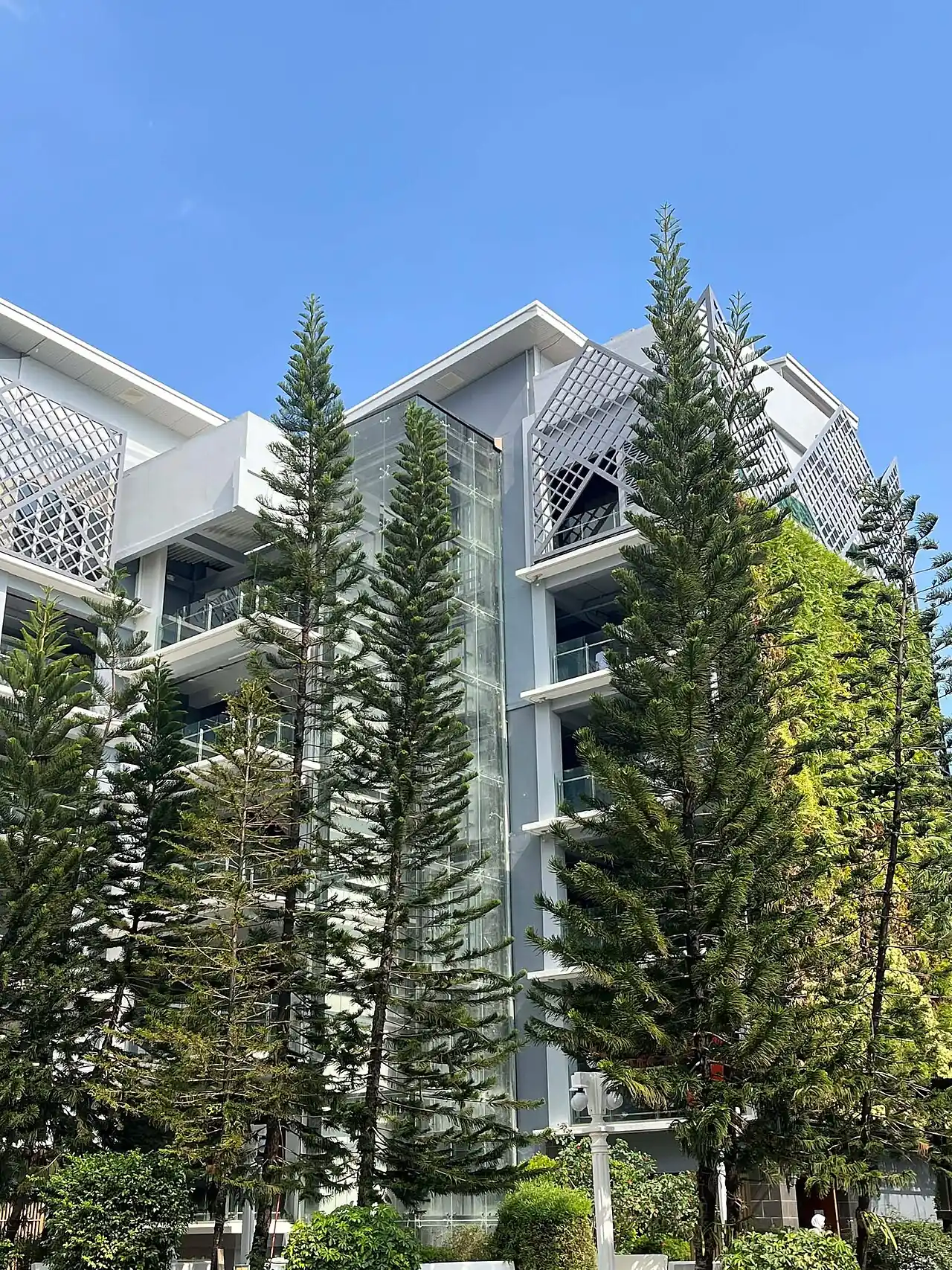 Verticalscapes
Iñaki Ábalos and his students asked what happens when the skyscraper and the city park stop being opposites.
- Javier García-Germán
He founded an office, edited books on energy and said that an architect’s work has moved off the drawing board.
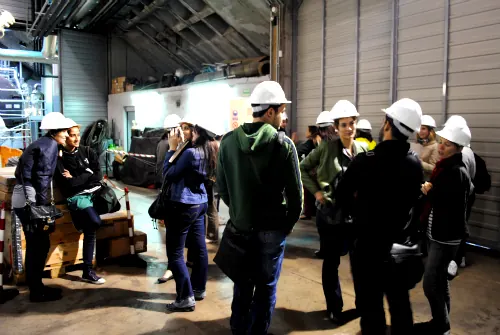 A day at the Ecopark
One excursion, two stops: a plant that handles rubbish and a plant that supplies buildings across a district.