Structure, geometry and material: why the shape of a building does the work
Agustí Obiol explains tall towers and wide roofs with one idea: geometry sets the limit, and material multiplies it.
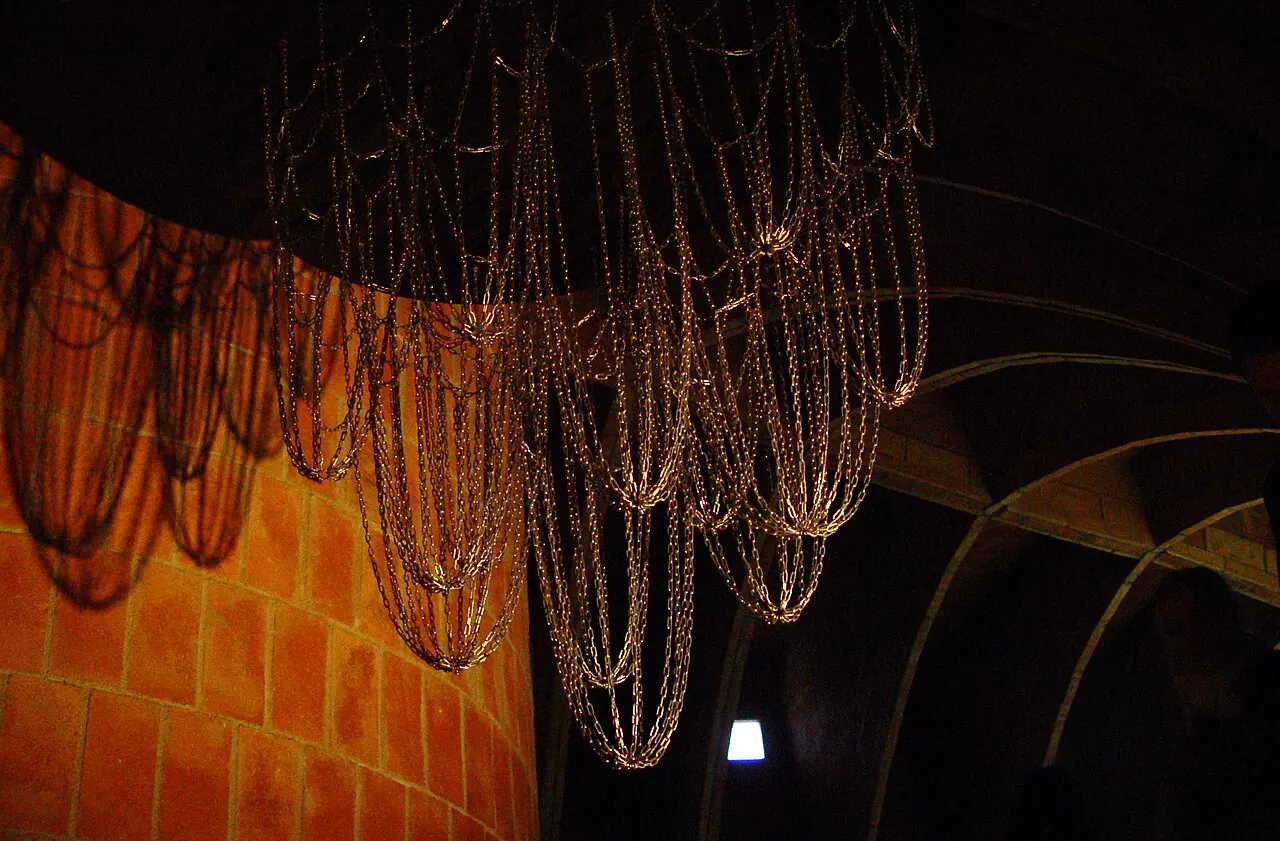

Start with a chimney. Le Messurier, whose work is discussed in an essay by Agustí Obiol, took it as the best shape for resisting sideways forces and asked how a chimney could be turned into a tower that people live in. The essay is about structure, geometry and material, and how the three depend on each other.
Obiol co-founded BOMA and has taught at the Universitat Politècnica de Catalunya. He describes Le Messurier’s method as close to sculpture. The building is imagined as a solid mass and emptied out, removing anything “that does not contribute to its strength”. Two measures guide the work: how stiff the tower is when it bends, and how stiff it is in shear, when its layers try to slide past each other. The aim is to find the shape in which the remaining mass works hardest.
Geometry sets the limit
Each type of structure has a range of sizes in which it makes sense. Obiol says that geometry defines those limits. Material acts as a simple multiplier.
The limits in use for structural types were defined by Myron Goldsmith and Fazlur Khan. They depend on the materials that exist. With much stronger and stiffer materials the whole scale would move forwards, though it would not move in a straight line.
Pulling, pushing and bending
A structure can be pulled, pushed or bent. Engineers call these tension, compression and bending, and Obiol connects each with a kind of balance. Tension is stable: a pulled cable straightens itself. Compression is unstable, since a thin column can buckle sideways. The balance of bending he calls indifferent.
This explains why roofs over large spaces usually rely on tension first, then compression, with bending some way behind. A beam has to do two jobs in one piece. One of its edges is pulled and the other is pushed, and the distance between them can be no greater than the depth of the beam. When pulling and pushing are given to separate parts, those parts can stand far apart, and the structure gains efficiency as the distance grows.
Obiol follows the idea to its end. If a skyscraper could be steadied by cables anchored hundreds of metres from its base, it could be much thinner and so much taller. One tower already shows the principle: the telecommunications tower by Norman Foster at Collserola, in Barcelona.
Five buildings side by side
Obiol’s students tested these ideas by comparing five constructions: the basilica of Hagia Sophia in Istanbul, Eladio Dieste’s market in Porto Alegre, Eero Saarinen’s Dulles Airport, the roof of Frei Otto’s Olympic Stadium in Munich and the sports hall in Huesca by Enric Miralles. They looked for similarities and differences. One course project proposed a structure for a wide building standing on four supports.
When the calculation takes over
The essay is also a complaint. Obiol recalls a speech in which Mies van der Rohe hoped that technology and architecture would one day express each other. He thinks that hope has rarely come true, because architects and engineers tend to work apart. Books with a wide view, such as Eduardo Torroja’s Philosophy of Structures, are exceptions.
He sees two ways of going wrong. In times of economic expansion, some projects chased a striking image and ignored the waste of resources. Elsewhere, pure calculation gradually replaced design.
He proposes two habits. The first is to know how much precision each phase of a project needs, because an early scheme and a developed design call for different amounts of analysis. The second is to find the few variables that decide the form. Most of the others only adjust the result.
Read next
 Energy and form
An engineer listed forms of energy from supernovae to home geothermal kits. The next speaker asked how much land the alternatives would need.
 Verticalscapes
Iñaki Ábalos and his students asked what happens when the skyscraper and the city park stop being opposites.
 Igualada studio
Sneakers, fashion and hot air balloons were bringing new energy to Igualada. Students asked what that could do for its old industrial quarter.